

Forward Thinking |
Beyond Today
Forward Thinking · Beyond Today
Forward Thinking · Beyond Today is a community space for thoughtful dialogue about the future of society and humanity as a whole.
This is not a political forum, nor a place for debate driven by fear or division. It is a reflective space for people who sense that the world is changing—and who wish to understand those changes with clarity, compassion, and responsibility.
Here, we explore:
The cause and effect of human choices
How technology, culture, and community shape our future
What it means to look inward while navigating an outwardly changing world
How individuals and small communities can adapt, respond, and remain human
This space welcomes visionaries, observers, deep thinkers, and quiet contributors alike. You do not need to have answers—only curiosity, respect, and a willingness to listen.
Forward Thinking · Beyond Today exists to foster meaningful conversation, shared insight, and collective awareness. It is a place to reflect, imagine, and gently prepare for what lies ahead—together.

Authoritarianism
Cause, Effect, and the Future of Society- Part 6
How one man could authorize genocide
When people ask, “How could Adolf Hitler do this?” the uncomfortable truth is: he didn’t do it alone, and he didn’t do it all at once.
The genocide of Jewish people during the Holocaust emerged through a system, not a single order shouted one day.
Key psychological mechanisms at play
1. Authoritarianism
Authoritarian systems condition people to:
Obey authority as a moral duty
Stop questioning once obedience becomes normalized
Transfer responsibility upward (“I was just following orders”)
This is well-documented in psychology (e.g., Milgram’s obedience studies).

A 20-Year View (≈2046) AI & automation Location: Northeastern New England, U.S.
Cause, Effect, and the Future of Society- Pat 5

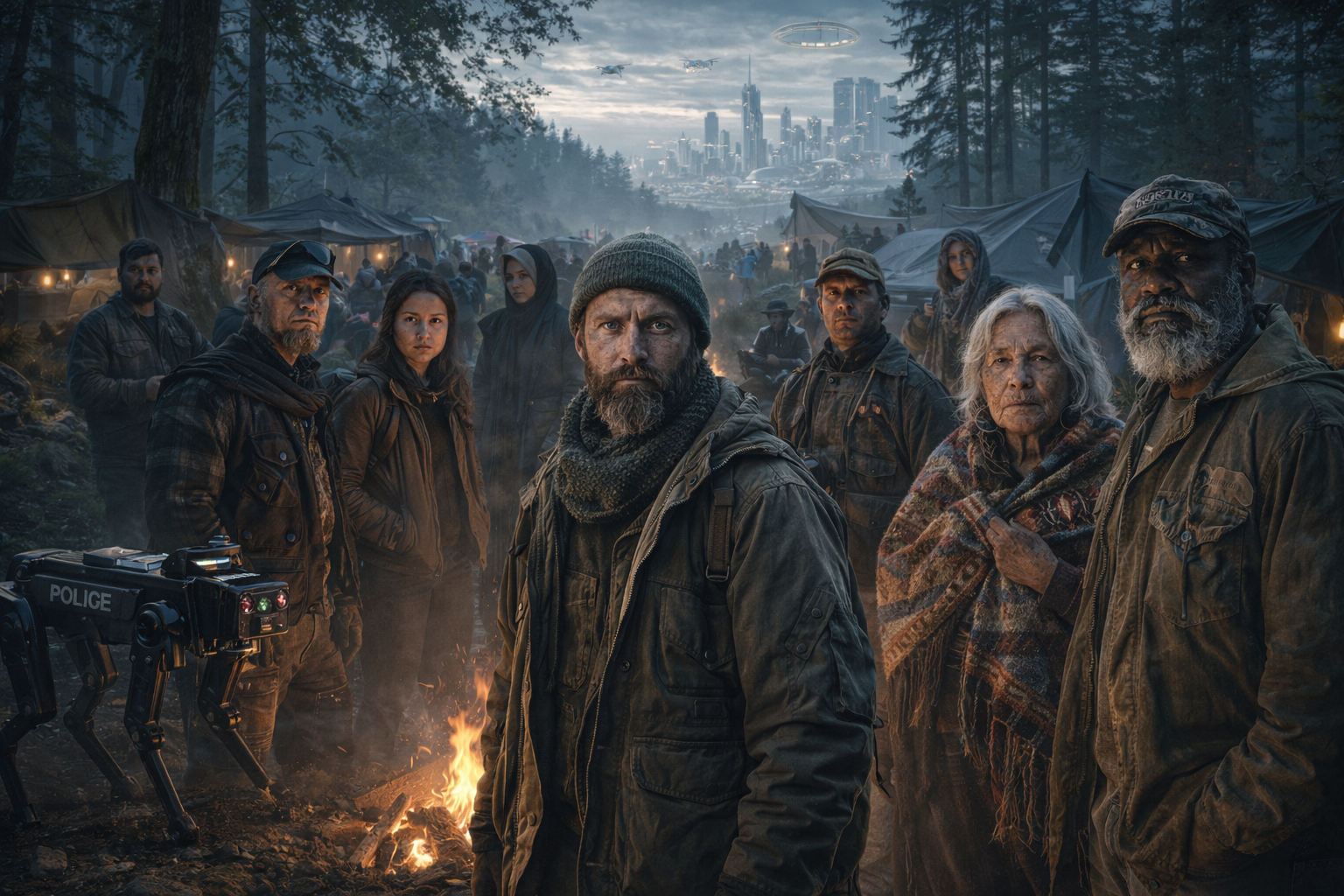
Who Will Resist this future, Who Will Prosper in it, and How Memory, Grief, and Spirituality Survive Beneath Surveillance.
Cause, Effect, and the Future of Society- Part 4

What Our Country Will Look Like in 50 Years with Ai
Cause, Effect, and the Future of Society- Part 3

When a Nation Is Brought to Its Knees-Cause, Effect, and the Future of Humanity Part 2
Cause, Effect, and the Future of Society - Part 2

Cause, Effect, and the Future of Society Part 1
Cause, Effect, and the Future of Society - Part 1
This is part of a series of reflections on how individual behavior, collective response, and governing systems influence one another—and how these relationships quietly shape the direction of society over time.
Some moments do not move through society and disappear. They settle. They alter how people feel inside their bodies and how they relate to the systems around them.
The killing of Renee Nicole Good is one of those moments—not because it was shocking, but because it was recognizable. When people see themselves in a loss, trust shifts in ways that are difficult to measure but impossible to ignore.
History shows that when recognition replaces distance, societies begin to reorganize quietly—not through revolt, but through withdrawal, re-evaluation, and a return to smaller, more human sources of meaning.
This reflection looks at that pattern, and what it tells us about how people reorganize when systems no longer feel human.