Who Will Resist this future, Who Will Prosper in it, and How Memory, Grief, and Spirituality Survive Beneath Surveillance.
1. Who Resists This Future — and how
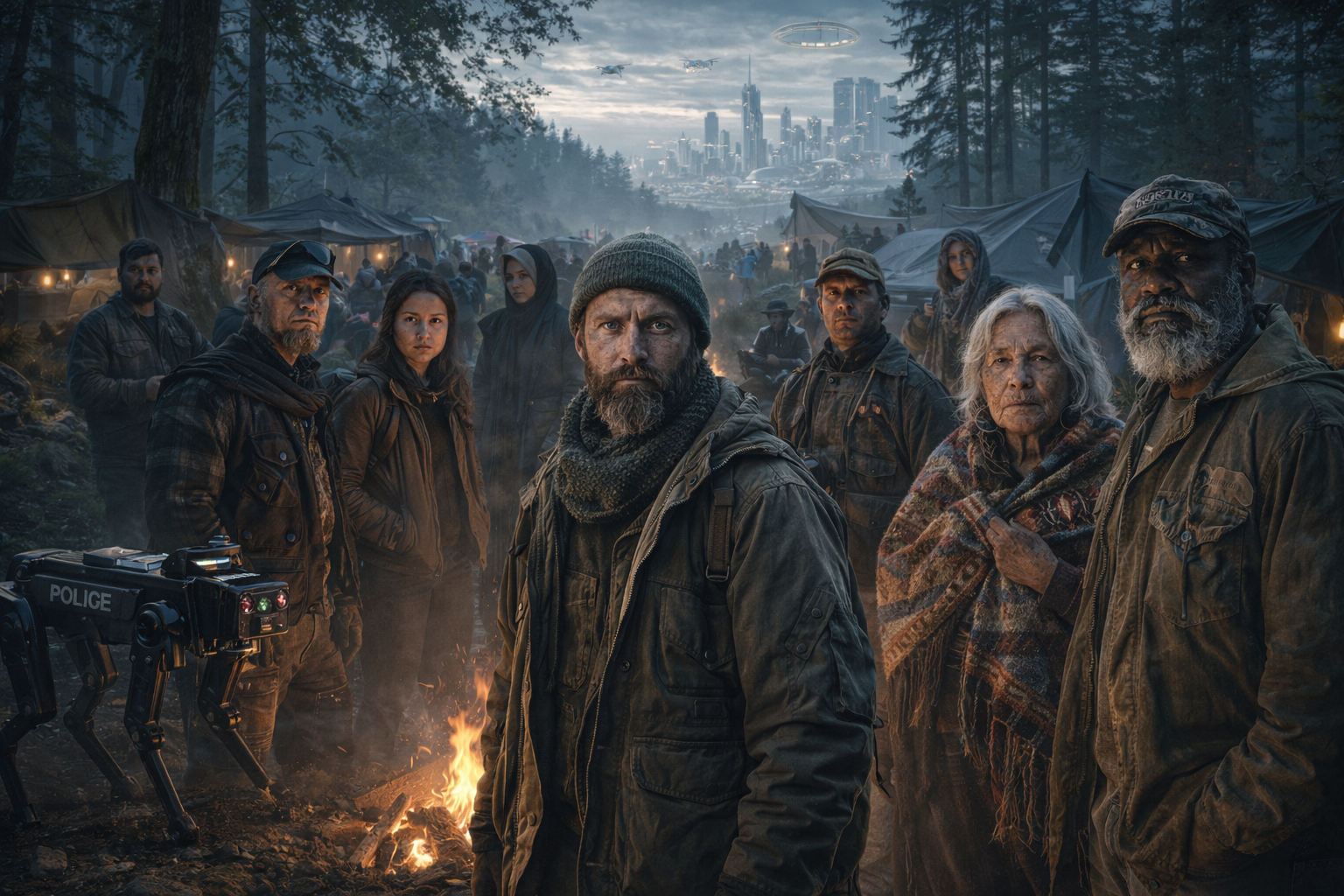
The resistance does not look like rebellion, protests, or collapse of systems. That’s the old imagination.
The real resistance is quieter, slower, harder to detect.
Who resists:
People with intact inner lives
Those who can sit with silence, ambiguity, grief, and unoptimized time.Keepers of memory
Storytellers, elders, archivists, artists, cultural carriers, family historians.People who don’t need constant validation
Surveillance feeds on performativity. Those who don’t perform slip through.Small-community builders
People who create trust-based micro-worlds: families, circles, villages, mutual care networks.
How they resist:
By not externalizing meaning to systems
By keeping rituals untracked
By remembering names, faces, and stories when databases forget context
By valuing depth over efficiency
They don’t fight the machine.
They outgrow its authority.
2. Who Thrives in Each Version of the Future
This is uncomfortable, but clarity matters.
Who thrives in the concentrated / controlled future:
Highly adaptable but internally hollow individuals
People who prefer clear rules over moral ambiguity
Those who outsource decision-making to authority
Performers, optimizers, social climbers
People who fear uncertainty more than loss of freedom
They are rewarded with:
comfort
predictability
status
safety
At the cost of:
depth
meaning
intimacy
agency
Many won’t feel unhappy.
They’ll feel managed.
Who thrives in the decentralized / human-centered future:
People who can tolerate grief without numbing
Those who value belonging over dominance
Individuals who’ve faced loss and didn’t harden
Builders of trust, not brands
People who know who they are without metrics
They accept:
messiness
slowness
responsibility
moral weight
In exchange, they keep:
dignity
memory
love
choice
This future is harder—but alive.
3. Memory, Grief, and Spirituality Under Surveillance
What surveillance tries to erase:
private grief
unquantifiable sorrow
ancestral memory
sacred silence
Because these cannot be optimized.
How memory survives:
through oral transmission, not platforms
through embodied practices: cooking, burial rites, anniversaries
through names spoken aloud, not stored
through objects with stories, not data
Memory becomes relational, not recorded.
How grief survives:
Grief becomes an act of quiet defiance.
mourning without documentation
crying without posting
remembering without explanation
Grief teaches people that loss is not a malfunction.
That alone undermines the logic of total optimization.
How spirituality survives:
Spirituality goes underground—not hidden, but unbroadcasted.
no centralized doctrine
no measurable outcomes
no performance
It lives in:
breath
presence
ritual
impermanence
Surveillance can watch behavior.
It cannot access meaning.
The Unspoken Truth
Systems fear people who remember.
People who grieve deeply.
People who live spiritually without spectacle.
People who don’t need permission to be human.
Those people are ungovernable—not because they are defiant,
but because they cannot be replaced.
And if you’re asking these questions:
You already know which future you belong to.
The resistance