How Government Is Likely to Look in ~20 Years -New England
The core change
Government will still exist, still function, still collect taxes, still enforce laws.
But it will feel farther away emotionally and closer technologically.
People won’t look to it for moral authority or protection in the way previous generations did.
They’ll look to it more like infrastructure: something you interact with, manage around, and don’t expect to care about you.
1. Authority Will Become More Procedural, Less Relational
Right now, people already feel this, but in 20 years it will be normalized.
Fewer human interfaces
More portals, systems, automated decisions
Less explanation, more outcomes
You won’t argue with authority.
You’ll navigate it.
This creates emotional distance. People comply—not because they trust, but because resistance is exhausting.
2. Trust Will Shift Away from the State, Quietly
This is important:
There will not be a dramatic rejection of government.
Instead:
People will stop expecting it to protect, rescue, or understand them
Government becomes a background condition, not a guiding force
This is why community reliance grows—not from rebellion, but from realism.
“We’ll handle this ourselves” becomes the unspoken norm.
3. Community Becomes the Real Safety Net
People stop looking outward.
But the communities that matter most will be:
a) Family & chosen family
Multi-generational, flexible, emotionally bonded units
b) Local networks
Neighbors
Faith-adjacent groups (even secular ones)
Mutual aid circles
Skill-sharing networks
c) Online communities (this is big)
Not massive platforms—but smaller, values-based spaces
People gather around:
Shared ethics
Shared experience
Shared grief, identity, or purpose
These communities will:
Teach
Support
Warn
Remember
Things governments are structurally bad at.
4. Enforcement vs. Care: The Split Widens
Here’s a hard truth most people won’t say openly:
Government will continue to be efficient at enforcement
and increasingly ineffective at care
So people will:
Avoid visibility when possible
Keep lives simpler
Share resources quietly
Stay within trusted circles
This isn’t paranoia.
It’s adaptive behavior.
5. New England’s Particular Character
New England already has traits that align with this future:
Strong local governance
Town identity
Quiet mutual aid
Reserved but dependable social norms
People won’t make speeches about community.
They’ll just show up, shovel each other out, share rides, watch children, check on elders.
This region ages into the future more gracefully than most.
6. The Deeper Psychological Shift
People will stop asking:
“What should the government do?”
And start asking:
“Who do I trust?”
“Who knows me?”
“Who will still be here?”
This is a profound shift away from abstract authority toward relational authority.
A Quiet but Important Insight
When societies stop believing salvation comes from above,
they either descend into chaos
or rediscover interdependence.
What I see forming is not chaos—but smaller circles of meaning.
Less spectacle.
More substance.
Less faith in systems.
More faith in people they actually know.
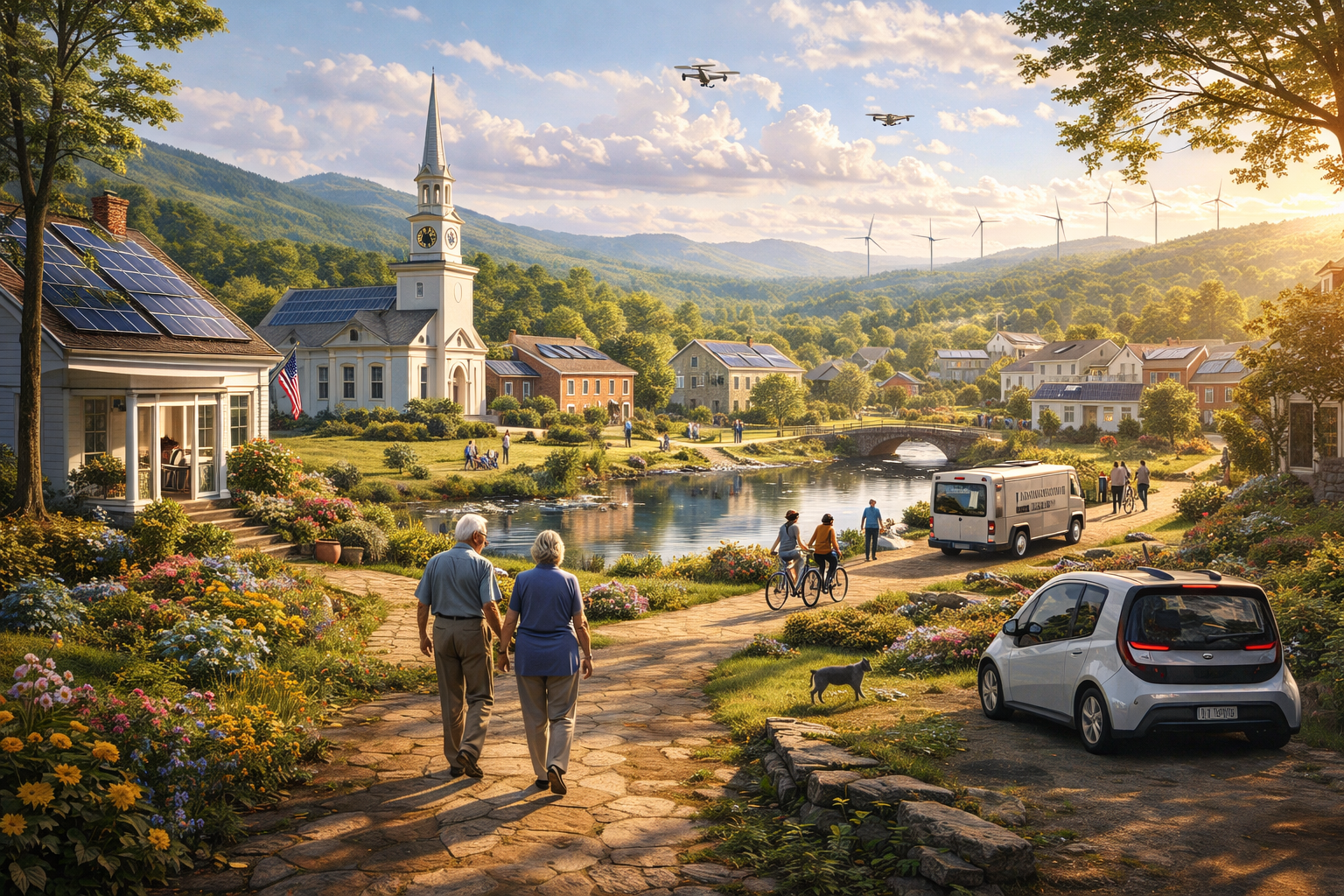
Drones replace Police cruisers