A 20-Year View (≈2046) AI & automation Location: Northeastern New England, U.S.
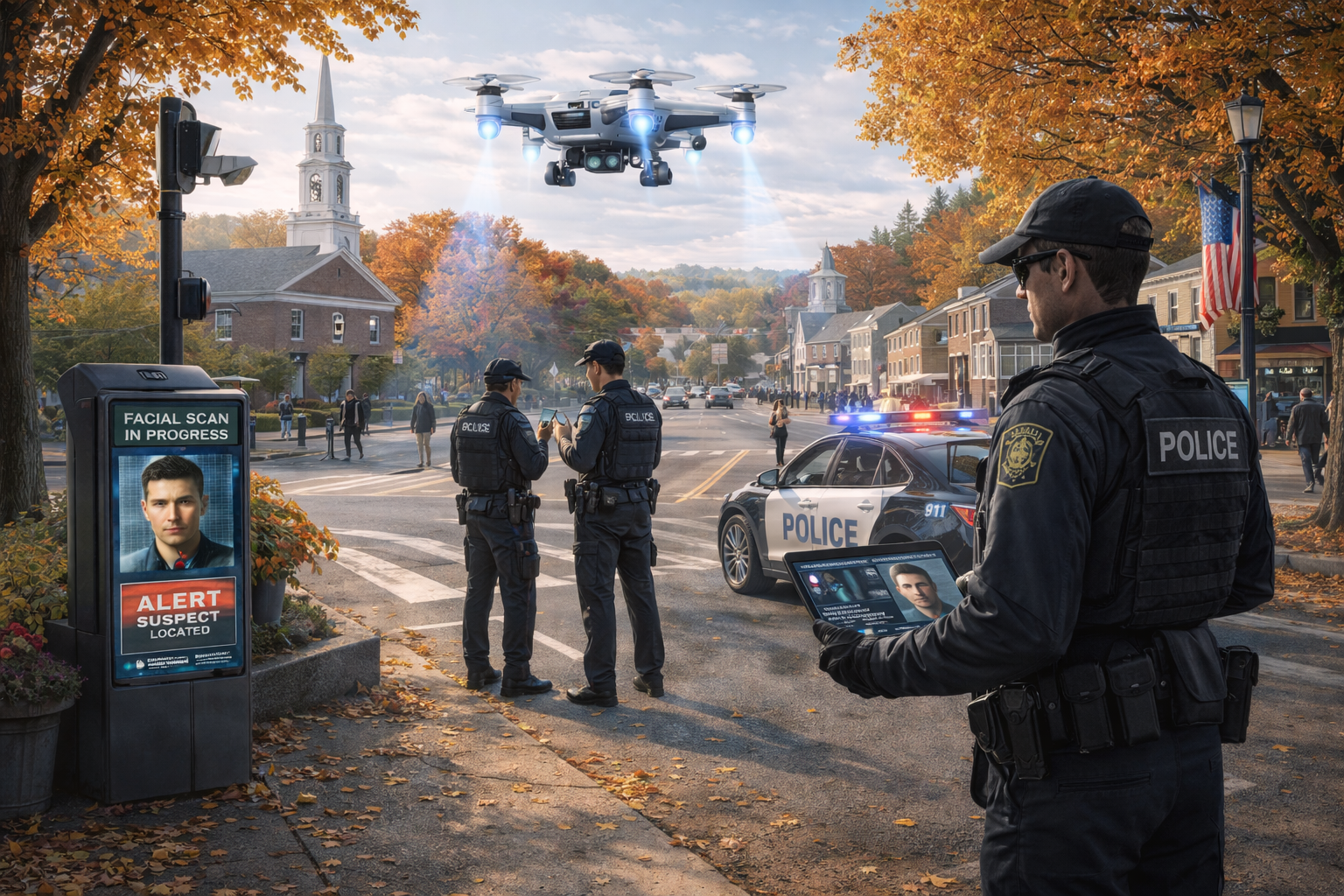
Policing in 2046
The short truth first
New England will not look like a dystopian wasteland.
But it also will not feel like the America people remember.
It will feel quieter, more managed, more fragmented, and more inward-facing.
1. Technology: Everywhere, Invisible, Decisive
AI & automation
In 20 years, technology won’t feel exciting—it will feel ambient.
AI will handle:
Scheduling, logistics, basic legal work, diagnostics, education scaffolding
Many white-collar jobs will be thinned, not eliminated
Humans won’t “use” AI much; they’ll live inside systems shaped by it
Most people won’t understand how decisions are made—only that:
Insurance was denied
Credit shifted
Access changed
Power won’t be loud. It will be procedural.
Daily life in New England
Smart infrastructure quietly monitoring:
Energy use
Heating efficiency (huge in NE winters)
Transportation flow
Fewer large retail spaces, more:
Automated delivery hubs
Localized “service nodes”
Towns feel intact—but less socially dense
2. Work & Economy: Fewer Ladders, More Patches
Employment
Stable, lifelong careers will be rare
People patch together:
Remote work
Local service roles
Caregiving
Creative or advisory micro-roles
Credentials matter less than adaptability
In New England specifically:
Older populations + fewer young workers
Labor shortages in:
Healthcare
Skilled trades
Elder care
Younger people who stay will have leverage—but less security
3. Social Fabric: Polite Distance
This is important.
People will still be kind.
But they will be guarded.
Fewer spontaneous social interactions
More:
Online communities
Curated circles
Intentional gatherings
Public trust remains fragile—not broken, but thin
New England already leans reserved.
That reserve will deepen.
Not coldness—self-containment.
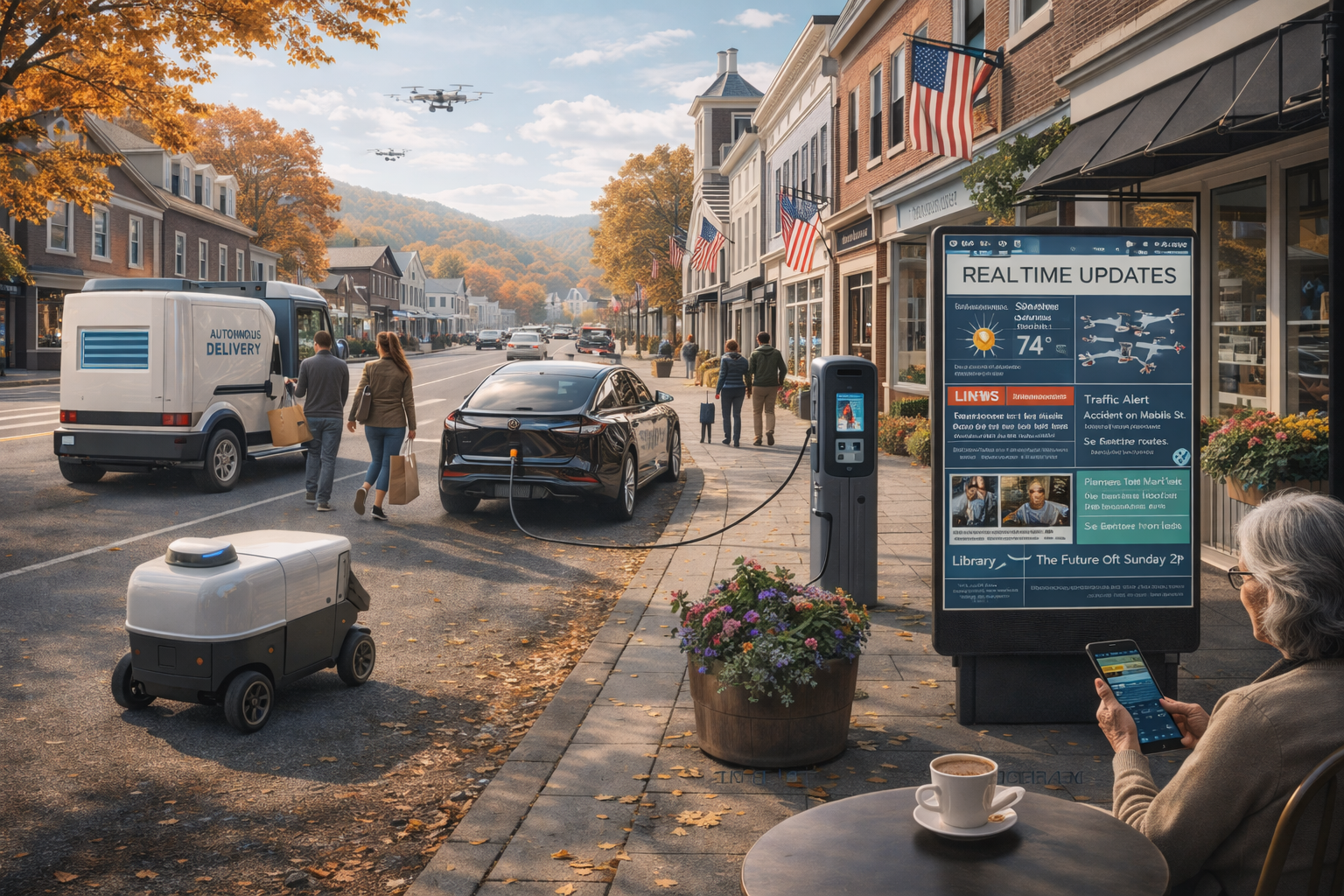
Small New England Town in 20 years
4. War, Greed, Power: Closer Than It Feels, Farther Than It Looks
Global conflict
There will still be war. But:
Less about territory
More about:
Data
Energy
Supply chains
Influence
Most Americans won’t experience war directly.
They’ll experience it as:
Higher costs
Scarcity anxiety
Media saturation
Moral exhaustion
Power
Power will consolidate upward—but quietly.
Not dictators.
Systems.
People will feel:
“I don’t know who decided this, but I can’t change it.”
That feeling will define the era.
5. Climate Reality (Especially New England)
New England will be one of the more livable U.S. regions.
Hotter summers, heavier rain
Milder winters—but more erratic storms
Infrastructure stress, not collapse
This will make NE:
More expensive
More desirable
More unequal
Those with land, skills, or community ties will fare better.
6. The Psychological Shift (This Is the Core)
Humanity in 20 years will be:
Less idealistic
Less performative
More inwardly focused
People will value:
Stability over growth
Meaning over status
Privacy over visibility
There will be a quiet spiritual hunger, not religious revival—but a search for:
Groundedness
Ritual
Real connection
Memory and lineage
Civilization won’t collapse—but it will simplify, slow emotionally, and reorganize around survival, meaning, and quiet resilience rather than expansion and spectacle.