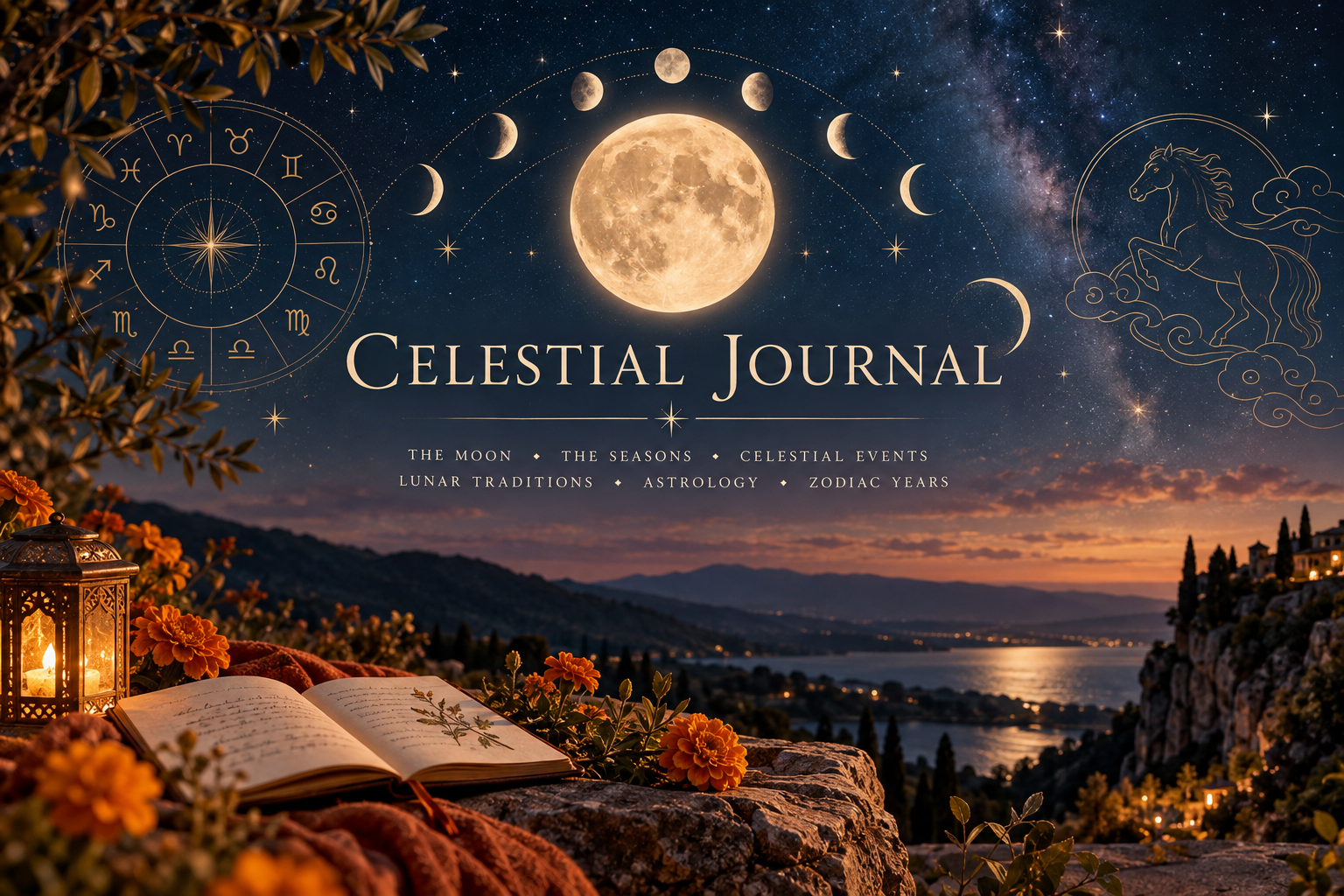
Celestial Journal
The sky has always helped us mark time.
We notice the changing moon, the turning seasons, the beginning of a new zodiac year, and the celestial moments that have carried meaning across cultures for generations.
The Celestial Journal is where Eternal Marigold explores those cycles as they unfold.
Here, you will find reflections on full moons such as the Harvest Moon and Strawberry Moon, lunar and seasonal traditions, astrology, Chinese and Eastern zodiac cycles such as the Year of the Horse, and other moments when the heavens seem to invite us to look a little more closely at our own lives.
This is not about predicting exactly what will happen.
It is about noticing patterns.
What is ending?
What is beginning?
What keeps returning?
What are we being asked to release, protect, remember, or carry forward?
For centuries, people have looked toward the moon, stars, seasons, and zodiac cycles to understand time, change, renewal, and their place within something larger than themselves.
Here, we do something similar.
We observe what is happening above us while paying attention to what is happening within us.
Because sometimes a moon is simply a beautiful moon.
And sometimes, because of where we are in our lives when we look up and see it, it becomes part of our story.
The Sky Above, The Nature Within
Western Astrology
Across cultures, humanity has always looked upward - not for escape, but for understanding.
Western astrology traces its roots to ancient Babylon, Greece, and Rome. It maps the movement of the sun, moon, and planets through twelve zodiac constellations. Each sign represents an archetype - a pattern of temperament, motivation, and expression.
Aries initiates.
Taurus sustains.
Gemini connects.
Cancer protects.
Leo radiates.
Virgo refines.
Libra harmonizes.
Scorpio transforms.
Sagittarius seeks.
Capricorn builds.
Aquarius innovates.
Pisces dissolves.
This system follows the solar calendar. It begins with the Spring Equinox and moves through the seasons, reflecting cycles of growth, maturation, harvest, and release.
Western astrology asks:
Who are you becoming?
Eastern Zodiac
The Cycle of Sacred Spirit Animals
Alongside the Western zodiac lives another powerful system - the Eastern twelve-year animal cycle.
Each year is guided by a sacred spirit animal, rooted in ancient Asian cosmology. These animals represent collective energy, temperament, and destiny themes for that year.
Rat - clever strategy
Ox - steady strength
Tiger - courage and momentum
Rabbit - grace and diplomacy
Dragon - power and expansion
Snake - wisdom and depth
Horse - freedom and vitality
Goat - creativity and gentleness
Monkey - intelligence and adaptability
Rooster - precision and boldness
Dog - loyalty and justice
Pig - generosity and abundance
Unlike Western astrology, which centers the individual’s birth chart, the Eastern system emphasizes collective rhythm - the spirit of the year itself.
Eastern astrology asks:
What energy is guiding us right now?
Two Systems - One Sky
Western astrology explores your personal blueprint.
Eastern astrology reflects the collective climate.
One is solar and psychological.
The other is cyclical and elemental.
Side by side, they offer a fuller view:
Who you are
What season you are living in
And what the world is moving through
Here in Eternal Marigold, both traditions are honored - not as superstition, but as symbolic languages. Like psychology and Buddhism, they are tools to understand patterns of behavior, timing, temperament, and growth.
We do not worship the stars.
We observe them.
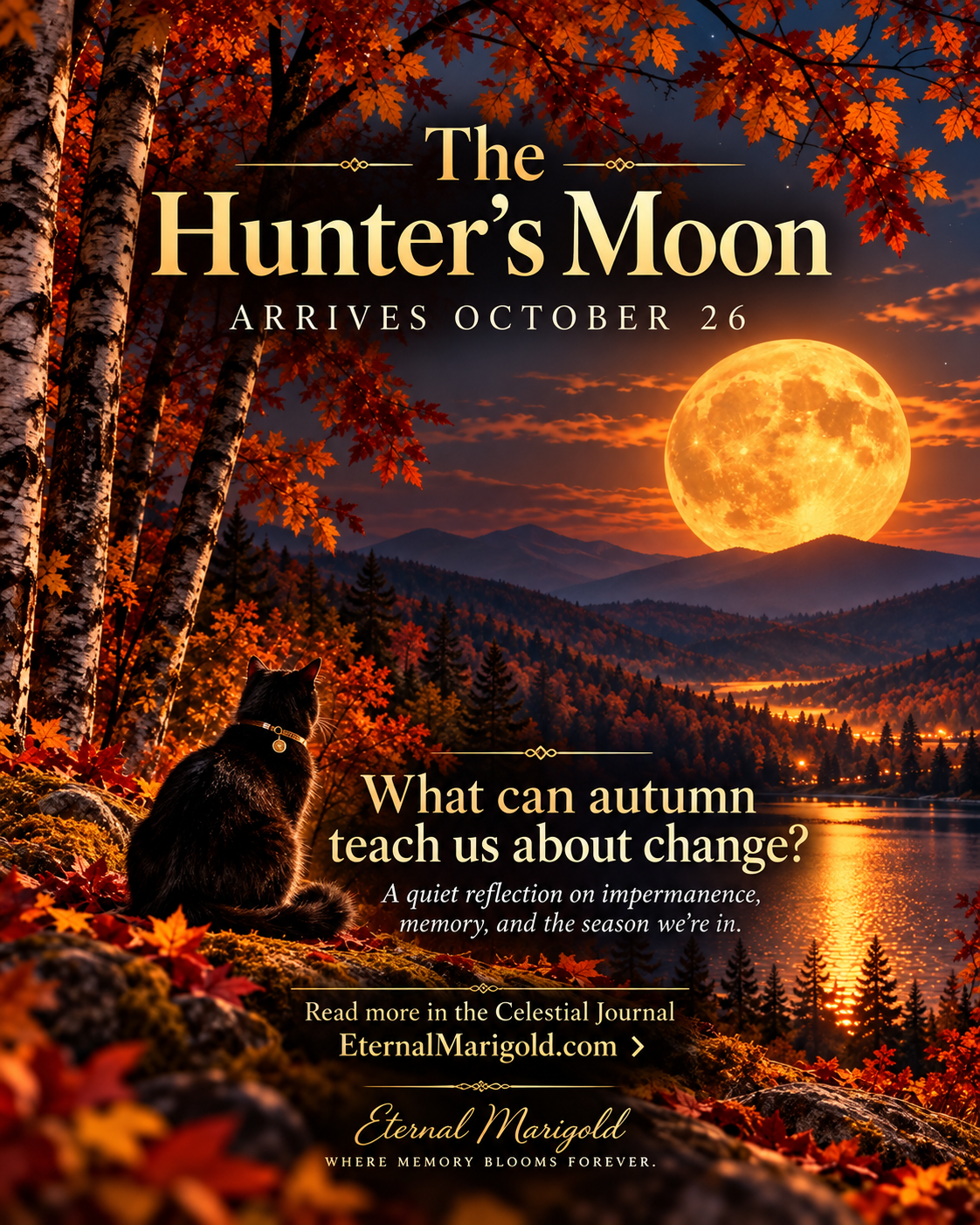
The Hunter’s Moon: What Autumn Teaches Us About Change
The Hunter’s Moon arrives October 26, marking another turning point in autumn. Discover the history behind its name, the traditions that connect us to the changing seasons, and the gentle wisdom of impermanence. A reflection on change, remembrance, and learning to carry love through life's many seasons.
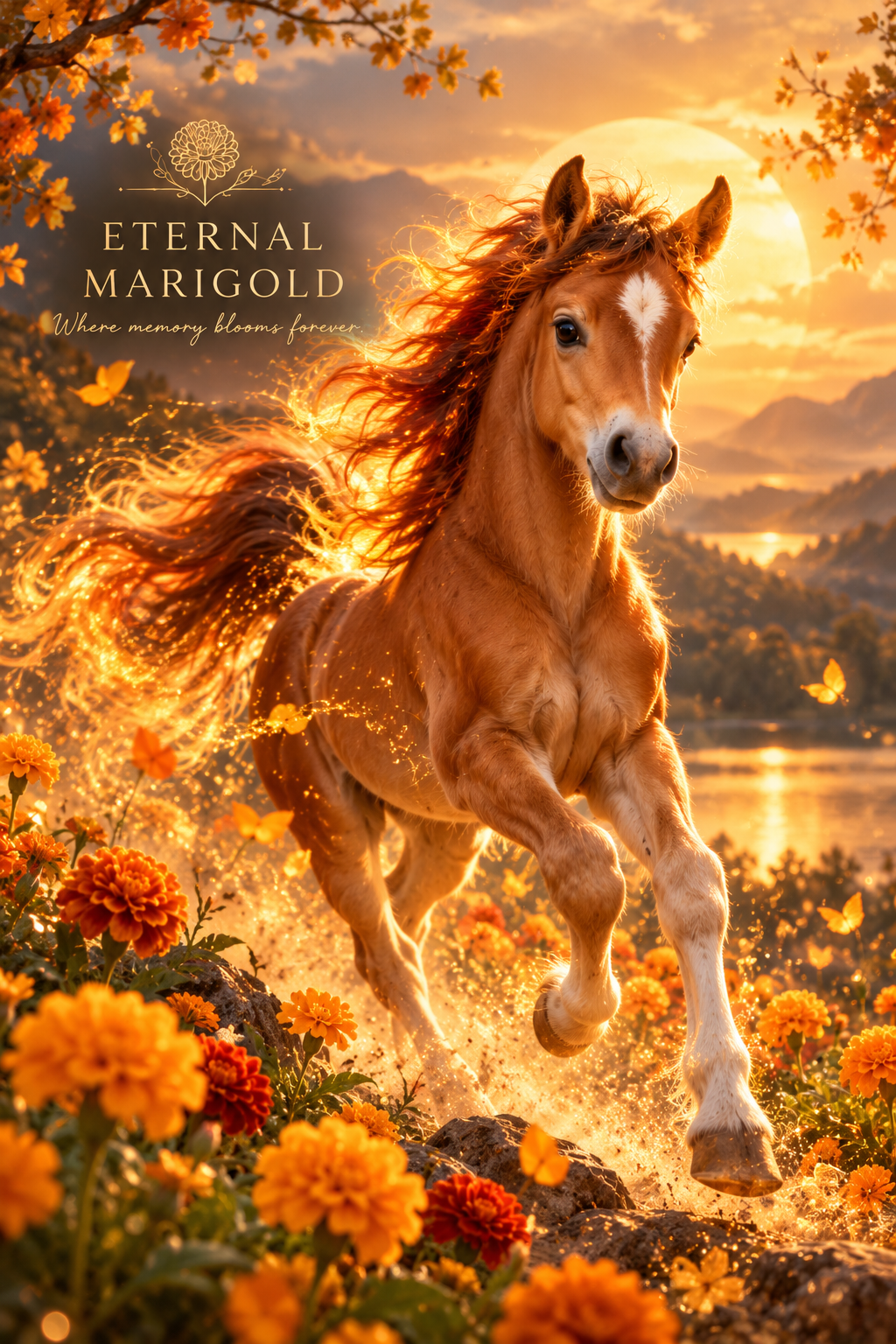
Born in the Year of the Fire Horse
What makes a Fire Horse baby so special?
Born during a rare zodiac year that returns only once every sixty years, the children of 2026 carry a birth-year symbol traditionally associated with courage, independence, curiosity, enthusiasm, and a fiery spirit.
But what about their strong emotions, determination, impatience, and desire for freedom?
Inspired by the Southeast Asian traditions passed down through my Lao and Thai heritage, this article explores the fascinating personality traits associated with Fire Horse children, their greatest strengths, potential challenges, and how parents can nurture their individuality as they grow.
Dedicated to my granddaughter, Isla Florence, and every precious Fire Horse baby born in 2026.
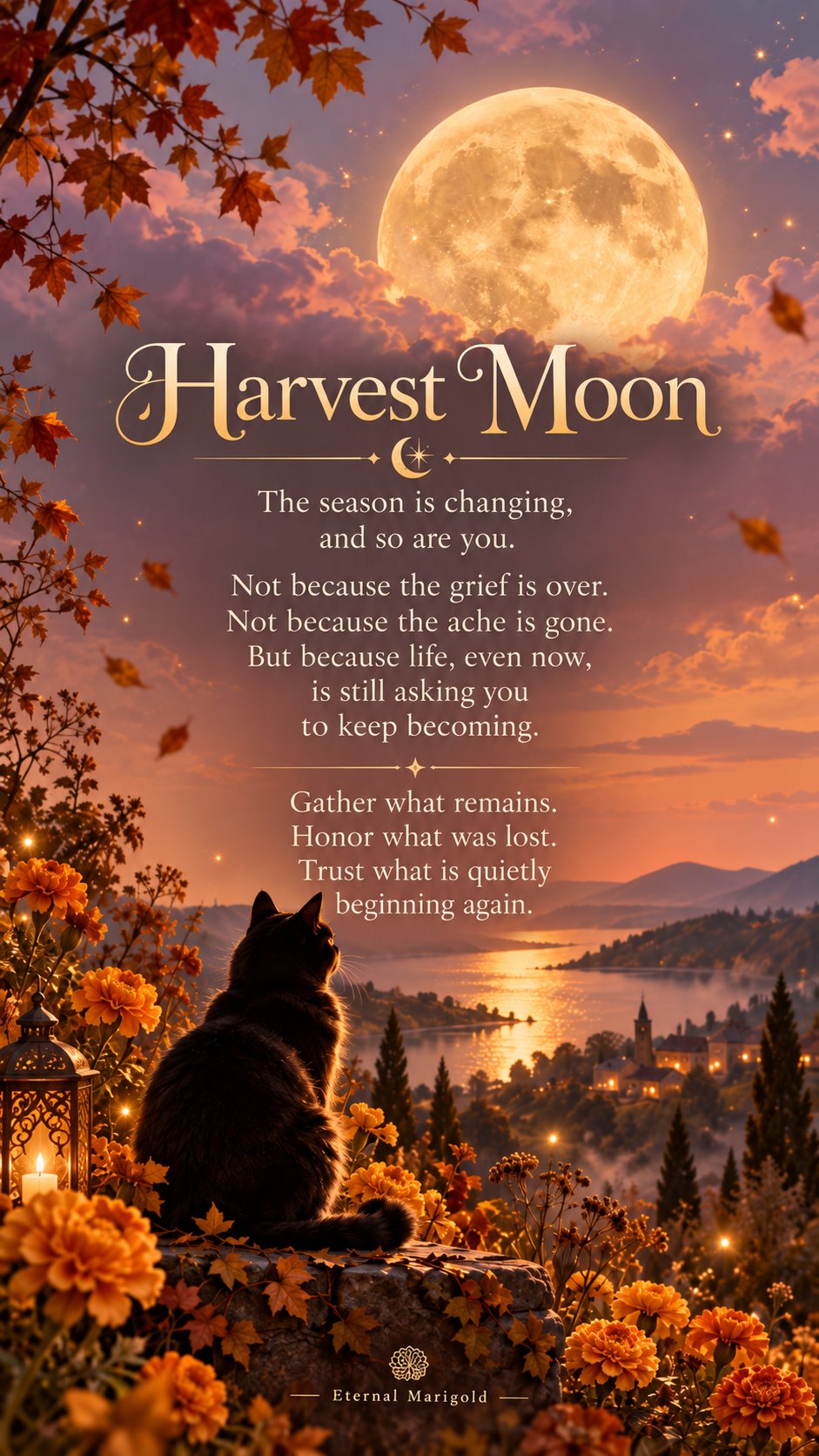
The Harvest Moon: What We Carry Into the Next Season
Every season reveals something about us. Sometimes we look back and realize what we survived. Other times, we are still learning how to carry what happened.
Beneath the Harvest Moon, we pause to honor what was lost, recognize what remains, and notice the quiet ways life continues asking us to become. This is not about leaving grief behind. It is about carrying love, memory, and ourselves forward into another season.

The Strawberry Moon: Honoring the Harvest Within
Strawberry Moon: A Season of Gratitude and Quiet Harvest
The Strawberry Moon is June’s full moon, named by Indigenous North American peoples to mark the brief season when wild strawberries were ready for harvest. Though its name may suggest a rosy-colored moon, its true meaning is rooted in gratitude, abundance, and honoring the gifts each season brings.
At Eternal Marigold, we see the Strawberry Moon as an invitation to reflect on the quiet harvests of the heart. Healing often unfolds slowly, like fruit ripening in its own time. Some of our greatest growth is not measured by what we accomplish, but by the peace we’ve found, the love we’ve preserved, and the memories we’ve learned to carry with grace.
As the moon rises, let it remind you to pause. Celebrate the moments that have nourished your spirit, give thanks for the lessons that have shaped you, and trust that what is meant for you will bloom in its proper season.
May this Strawberry Moon illuminate your path with gratitude, remembrance, and hope, revealing that the sweetest harvests are often the ones we cannot hold in our hands, but forever carry within our hearts.

Chiron Enters Taurus 🌿
Chiron enters Taurus, inviting us into a season of healing centered on self-worth, stability, and the quiet courage of building a life rooted in what truly matters. Sometimes the deepest transformation begins not by becoming someone new- but by remembering the value that has always been within us.

The Quiet Invitation of the New Supermoon
Some of life’s most meaningful beginnings happen quietly. Discover how this New Supermoon in Gemini invites fresh perspectives, gentle growth, and the courage to begin again.

Moon in Aquarius - A Shift Toward Clarity, Freedom, and Perspective
Moon in Aquarius.
Some clarity only comes
when you stop reacting.
The moon in Aquarius is about perspective.
About space.
About seeing yourself - and your life - from higher ground.

Year of the Horse (2026) - Movement, Exposure, and Acceleration
THE YEAR OF THE HORSE - AND WHAT IT IS FORCING PEOPLE TO SEE
The horse energy doesn’t just move events; it changes people’s perception.