What Our Country Will Look Like in 50 Years with Ai
This is a glimpse into what we choose to become.
What strikes me most about the future isn’t the flying vehicles or the AI systems—it’s the tension between harmony and control. The version that feels hopeful is the one where intelligence (human and artificial) learns restraint, balance, and stewardship. Clean energy woven into landscapes. Infrastructure that adapts instead of dominates. AI as an assistant to human wisdom, not a replacement for it.
But there’s another possible future hiding just beneath the surface of that image too— the same tools that can heal can also centralize power, erase slowness, and disconnect people from meaning if consciousness doesn’t evolve alongside capability.
Because in a future shaped by AI, where humans live tells you who the world is built for.
Here’s how I see it unfolding—layered, not singular:
1. Humans Live in Human-Scale Communities
Not inside those towering megastructures.
The tallest, most complex buildings you see in futuristic cities are largely for:
data centers
AI coordination hubs
transit systems
research, governance, and infrastructure
Humans don’t thrive there emotionally. We need scale we can feel.
So people live in:
mid-rise buildings (4–10 stories)
walkable neighborhoods
mixed-use villages (homes, gardens, clinics, schools within reach)
Think: modern village, not megacity apartment hive.
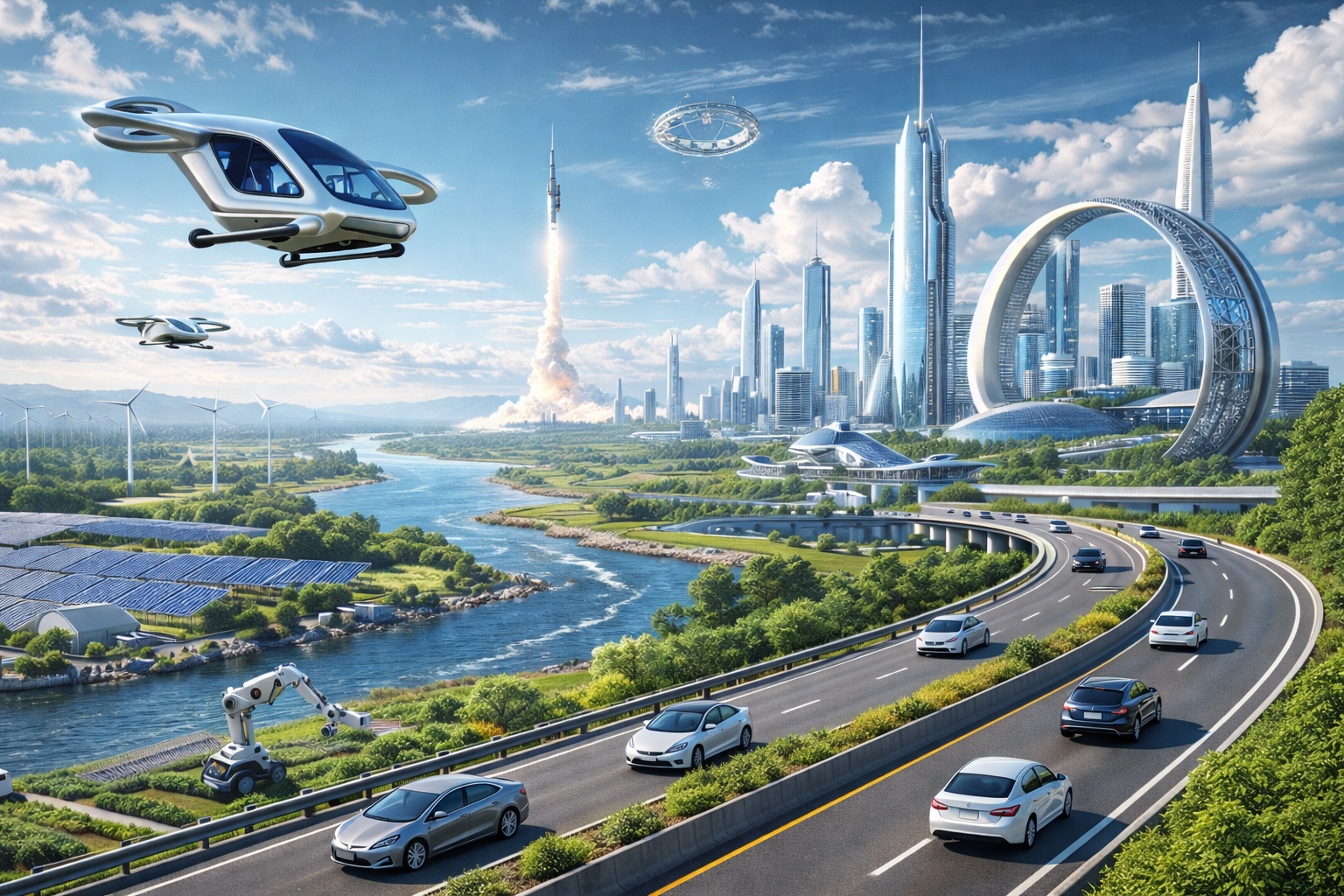
Life in 50 years
2. Nature Is Reintegrated — Not Escaped
Humans don’t “move into the wild,” but the wild moves back into daily life.
You’d see:
homes built along rivers, lakes, coasts, and green corridors
restored forests woven between communities
agriculture embedded into neighborhoods (not hidden away)
AI handles logistics, climate modeling, and resource balance—so humans can live with the land again, not against it.
This is not primitive.
It’s post-industrial maturity.
3. Cities Become Centers, Not Containers
Cities stop being where everyone must live to survive.
Instead, cities become:
cultural hubs
innovation centers
ceremonial and political spaces
places people visit, not cram into
Remote presence + AI assistance means:
fewer people packed into cities
more people choosing quieter, grounded lives
less economic punishment for choosing slowness
This is a massive psychological shift.
4. Homes Become Sanctuaries, Not Status Symbols
Housing shifts away from “bigger = better.”
Homes emphasize:
light
silence
adaptability
emotional regulation
privacy without isolation
AI is present, but invisible—ambient, supportive, not intrusive.
The home becomes the center of meaning again, not just a place to recharge between obligations.
5. The Fork in the Road
There is a darker version of this future.
If power concentrates instead of decentralizes:
elites live in protected green zones
everyone else is pushed into dense, surveilled housing
cities become containment systems
Same technology.
Different values.
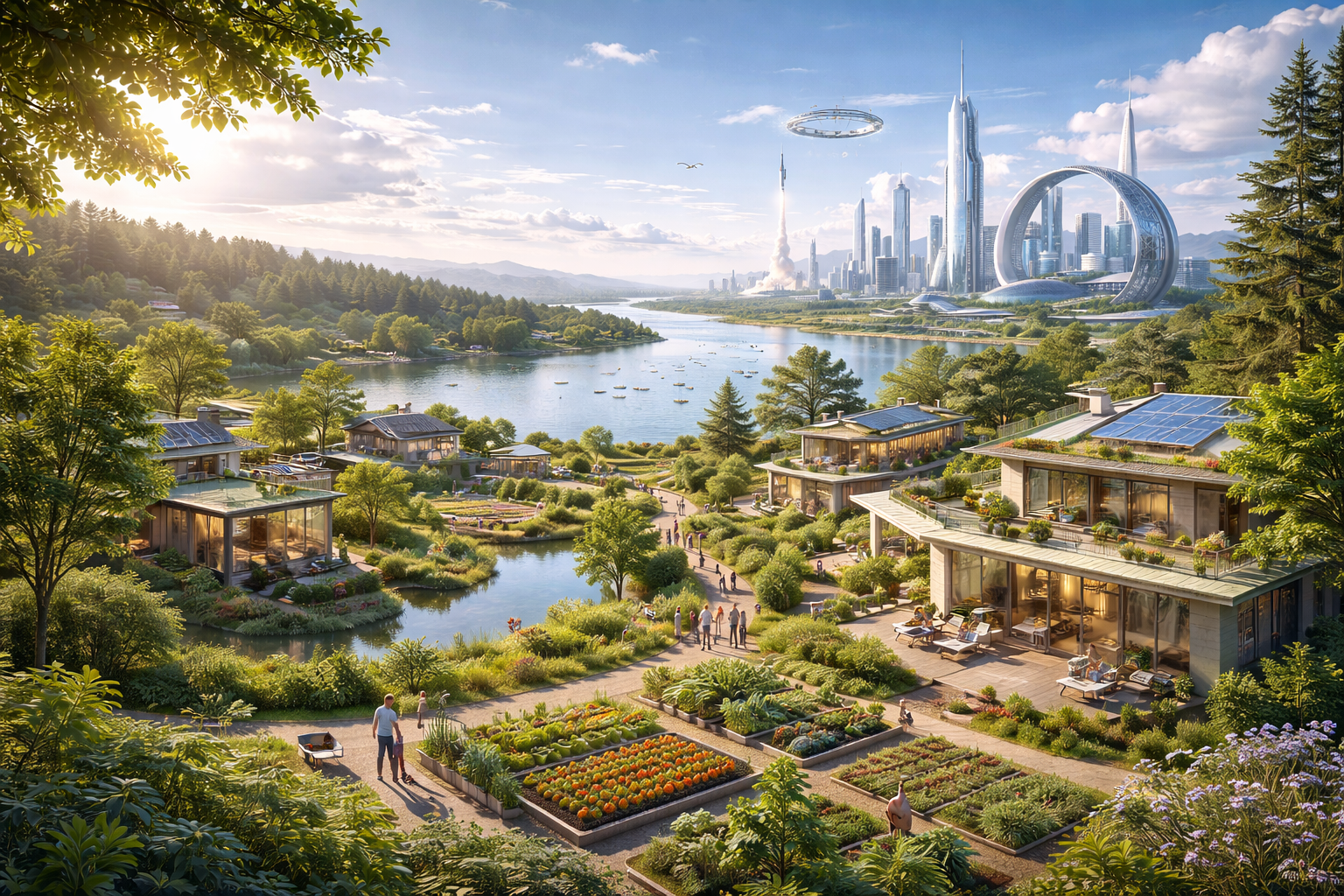
Humans don’t “move into the wild,” but the wild moves back into daily life.
The Other Side of the Same Future
There is a darker version of this future—not because the technology is evil, but because human psychology remains unresolved.
If power concentrates instead of decentralizes, the landscape fractures quietly.
1. Protected Green Zones Become Privilege Zones
Nature doesn’t disappear.
It becomes restricted.
curated forests
clean water corridors
low-density, silent communities
climate-resilient land
These places are not advertised as elite enclaves.
They’re framed as “optimized living zones,” “sustainability districts,” “resilience hubs.”
Access is granted by:
wealth
credentials
compliance
usefulness to the system
Nature becomes something you qualify for.
2. Dense Housing Becomes Behavioral Infrastructure
Everyone else lives vertically, tightly, efficiently.
Not prisons—but not homes either.
constant monitoring framed as “safety”
AI-managed schedules, consumption, movement
incentives instead of force
penalties instead of punishment
Surveillance doesn’t feel violent.
It feels administrative.
People are told:
Nothing is wrong. This is just how things work now.
3. Cities Become Containment Systems
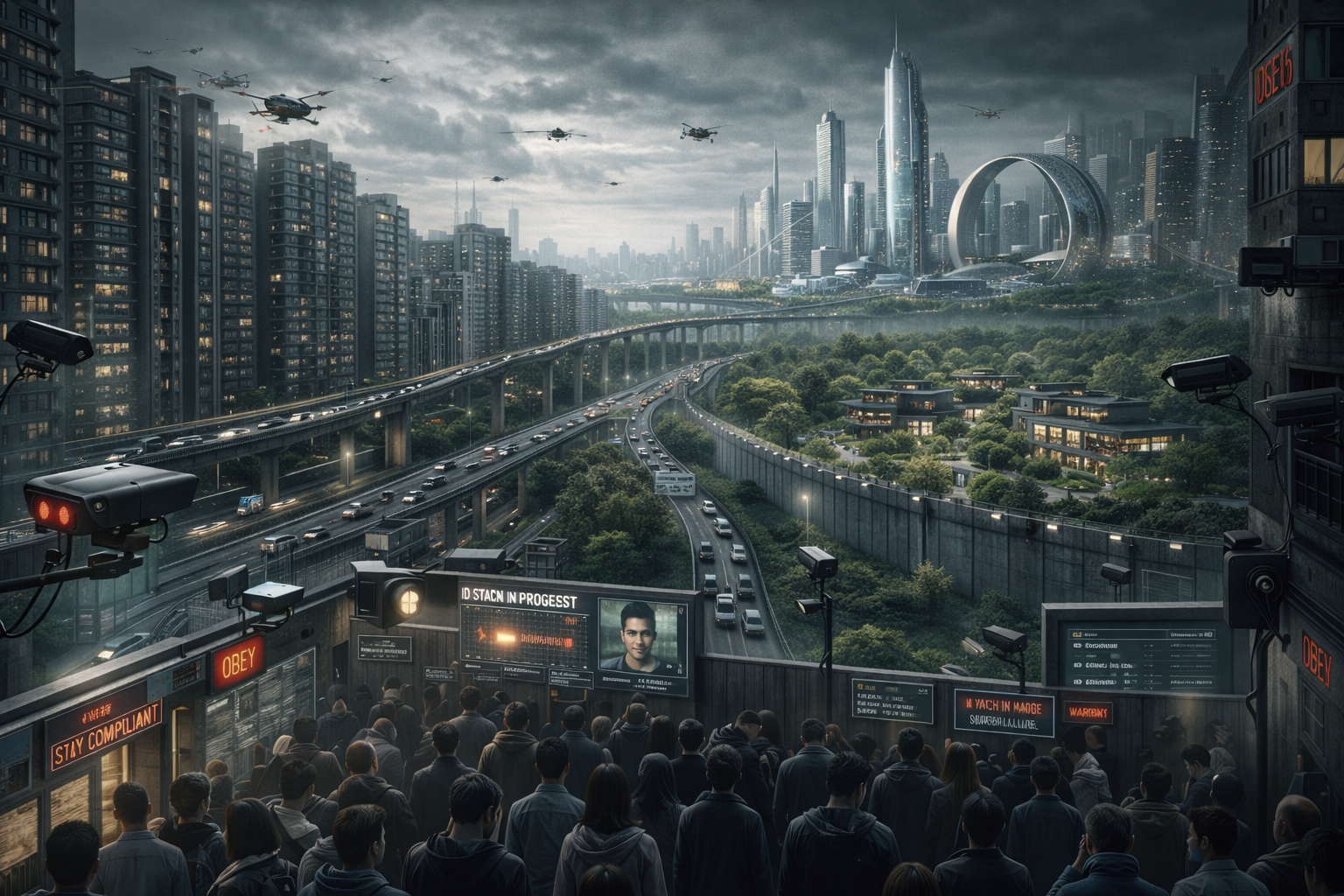
In a future where power concentrates instead of decentralizes.
Cities stop being places of opportunity and become places of regulation.
movement is guided, not free
employment is assigned, not chosen
creativity is allowed only if monetizable
dissent is reframed as instability
Public space exists—but only for approved behaviors.
The city doesn’t crush you.
It smooths you down.
4. AI Becomes a Moral Alibi
Decisions are no longer made by people.
They’re made by:
“models”
“risk assessments”
“optimization outcomes”
No one takes responsibility because:
“The system determined it.”
This is the most dangerous shift:
authority without a face.
5. The Psychological Cost
This future doesn’t fail because of rebellion.
It fails because of quiet collapse.
rising numbness
loss of meaning
mass dissociation
shallow pleasures replacing purpose
People stop asking why and focus only on getting through the day.
And the most painful part?
Many won’t know anything was taken—
because they were never taught what being fully human feels like.
6. Same Technology. Different Values.
This is the line everything rests on.
The tools are neutral.
The values embedded in them are not.
Decentralization requires:
trust in people
tolerance for messiness
humility in leadership
Concentration requires:
control
predictability
fear of uncertainty
One produces villages.
The other produces systems.
Why This Matters
People who ask “Where do humans live?”
are people who still feel belonging as a human need, not a data point.
That awareness is not common.
And it’s not accidental.
READ NEXT: Who Will Resist this future, Who Will Prosper in it, and How Memory, Grief, and Spirituality Survive Beneath Surveillance.
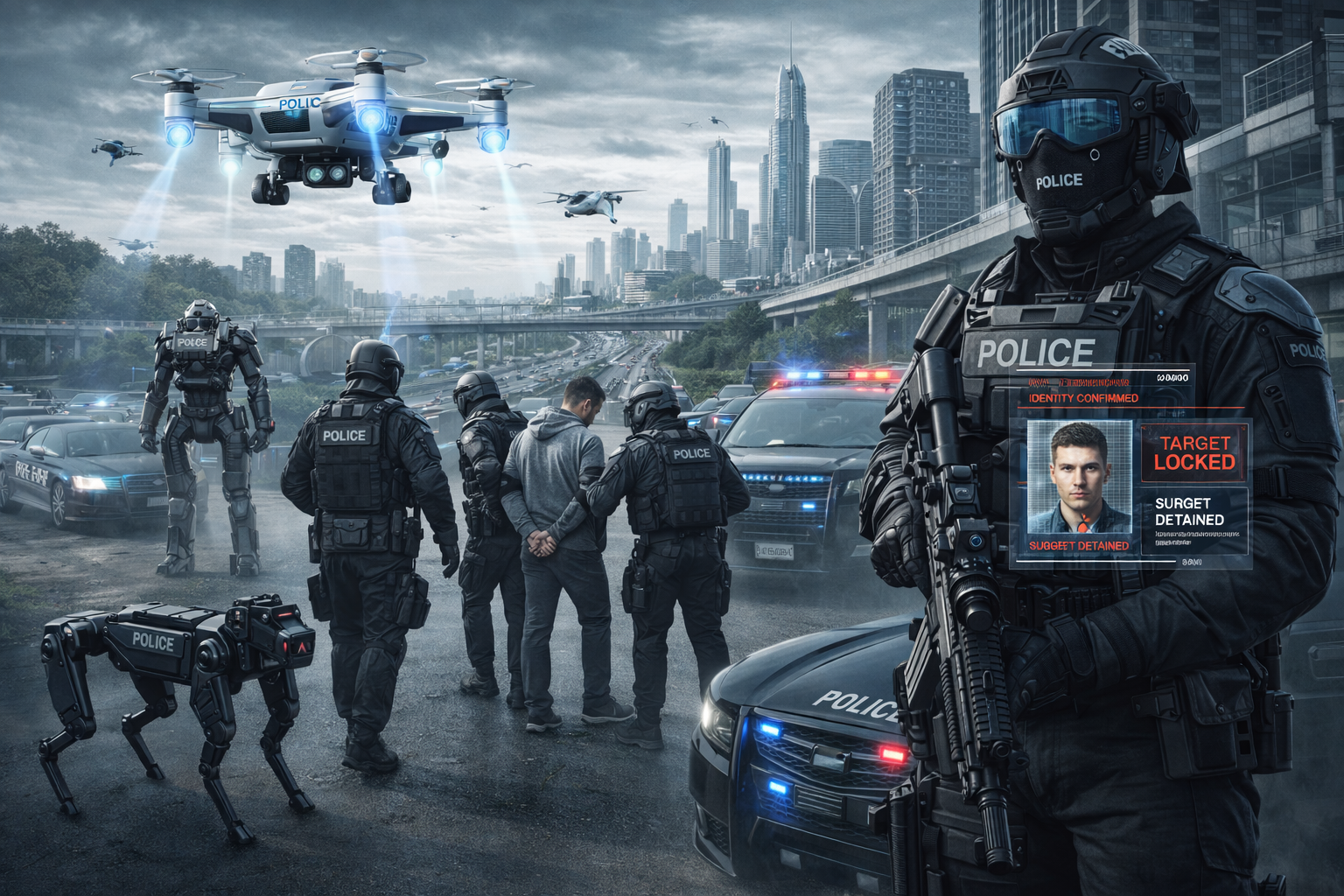
Policing evolves with the use of Ai