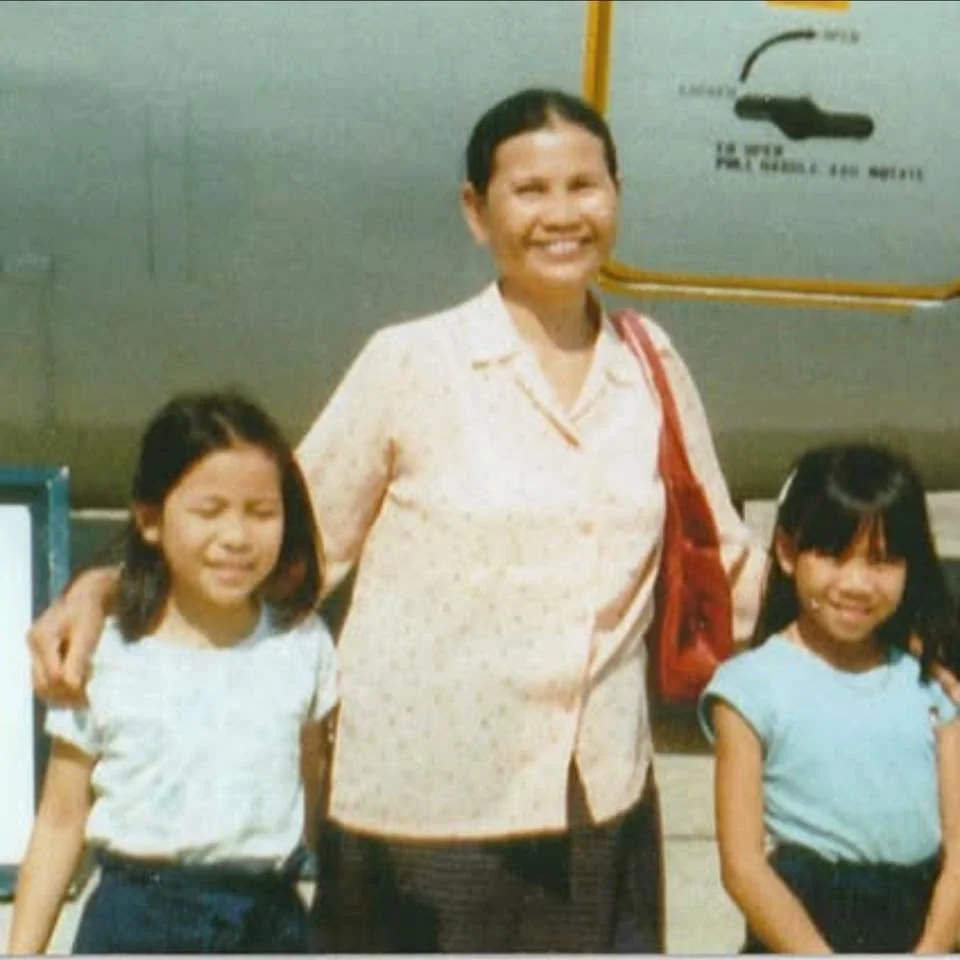
Mom, sister and I at the Air show at Peace Air Force Base. Circa 1982
The Life My Mother Imagined for Me
Some people feel comfortable following a path their family has helped choose. Others need to question, explore, and decide for themselves. Neither guarantees an easier life. But those differences can shape a relationship long before a child is old enough to explain them.
When a parent has a clear idea of who their child should become, an independent child can be difficult to understand. And when a child has hopes of their own, even loving guidance can feel limiting.
That was part of why my mother and I didn’t always get along.
The future she knew how to prepare me for
In the traditional Lao and Thai household where I grew up, preparing a daughter for adulthood meant teaching her to run a home, become a wife and mother, and marry a good man who could support her.
My mother taught me to cook, clean, and care for a household. She had expectations about how I should behave and what kind of woman I should become. These were everyday lessons, but they were also preparations for the life she pictured for me.
She wanted me to be capable, secure, and provided for. She was teaching me what she believed would help me have a good life.
Parents often prepare their children for the world they understand. Their experiences shape what they consider safe, respectable, or necessary. The things they fear can become the things they work hardest to keep their children from experiencing.
But sometimes the future that reassures a parent leaves a child wondering where their own dreams will fit.
The daughter who had her own ideas
From a young age, I had a mind of my own. I questioned things. I wanted to think them through and make choices I understood.
I spent plenty of time playing with my siblings, but I also spent hours reading, drawing, and living in my own little world. Books expanded what I could imagine. I thought about the world, the universe, and everything beyond what I knew.
I had hopes and dreams before I had any clear idea of how to pursue them.
While my mother was preparing me for the future she understood, I was imagining what else might be possible.
Growing up across cultures added another layer. The traditions within our home existed alongside the possibilities I encountered outside it and in the books I read. I was learning from all of them.
That difference showed up in ordinary moments. We might have been disagreeing about a chore, a lesson, or how I was supposed to behave. But beneath those arguments were larger expectations about my life.
What felt to me like thinking for myself may have looked to her like refusing guidance. What she meant as preparation could feel to me like a future being decided before I had a chance to discover my own wishes.
There was value in what she taught me. But I also needed room to decide who I wanted to become.
Many families experience some version of this tension. A parent may picture a particular career, marriage, faith, or way of life for a child. The child may want something else, or simply need time to find out.
The disagreement becomes painful when choosing differently is understood as being ungrateful, disrespectful, or unwilling to listen.
Sometimes the daughter wants to ask, “Can you trust me even if I choose differently?”
Sometimes the mother wants to say, “I’m afraid of what could happen to you.”
Instead, they argue about what she should do.
What I carried into adulthood
During my teenage years and into adulthood, there were times when I felt I was failing at life. When things went wrong, I sometimes blamed my mother.
Some of her decisions had affected my direction before I had much say. Others left me feeling pushed toward choices I might not otherwise have made. When I struggled, I looked back at those moments and felt that some of it was her fault.
I carried those feelings for years. At the time, I couldn’t separate the effect her decisions had on me from what she had been trying to do for me.
Many of us carry unresolved feelings like this. We remember when we felt unheard, the choices we weren’t allowed to make, or the expectations we struggled to meet. Later disappointments can bring those memories back, along with the question of how different life might have been if we had been given more room.
Those experiences can also shape how we respond to people now. We may feel guilty when we disappoint someone, struggle to make a decision without approval, or become defensive before someone has finished offering advice.
Understanding what we carry gives us a chance to consider how it is affecting the life we are living today.
Understanding her differently
Especially after my mother passed away, I began looking more closely at the woman behind those expectations.
I thought about her upbringing, her sacrifices, and the circumstances that shaped her. I could see more of why security mattered to her and why she wanted to prepare me in the ways she knew.
Looking back, I know she was right about some of the choices she warned me about. Things I couldn’t see then, she seemed to recognize. Sometimes it feels as though she could see my future, perhaps because she understood more about life than I realized.
Even when I chose differently, she still had hopes for me.
That understanding brings its own sadness. I think about our arguments and wish I had recognized more of the love and worry behind her words. What I experienced as interference was sometimes her effort to protect me from something she could see coming.
Many of us reach a point when we understand our parents differently. We recognize concerns we once dismissed and care we couldn’t always recognize in the way it was expressed. Sometimes we wish we could revisit a conversation with what we know now.
But understanding her intentions does not require me to dismiss what hurt.
My mother was trying to protect her daughter. I was trying to find my way while living with feelings I didn’t yet understand. I can regret some of our arguments and still have compassion for the younger version of me who felt unheard.
Both are part of our story.
The life we never lived
Sometimes I still wonder whether my life would have been easier if I had followed my mother’s wishes.
Would I have struggled less? Would I have been more secure? Would I have been happy?
Many of us have a version of those questions. We think about the advice we didn’t take, the relationship we chose, or the opportunity we left behind. When life is difficult, we revisit the moment when we might have gone another way.
But we know the difficulties of the life we lived. The other life is largely imagination.
Following my mother’s wishes might have spared me certain struggles. It might also have brought difficulties I cannot picture. I cannot compare the full reality of my life with only the hopeful possibilities of another.
What I can do is recognize where her decisions affected me, take responsibility for the choices that were mine, and learn from both.
I can acknowledge mistakes without deciding that wanting independence was itself a mistake. I can appreciate my mother’s wisdom without believing she could have guaranteed my happiness.
She was looking ahead with the experience she had. I was looking ahead with hopes of my own. Only later did I understand some of what she had been trying to tell me.
What we can carry forward
As a mother and grandmother, I understand the desire to picture a good life for the people we love. We want to protect them. We want our experience to spare them unnecessary pain.
But loving someone also asks us to stay curious about who they are.
What matters to them? What do they hope for? Are we giving their dreams as much attention as our concerns?
Our hopes for someone can become expectations so gradually that we stop noticing the difference. Remembering how it felt to be on the receiving end can help us listen more carefully.
We can explain our worries, share what experience has taught us, and leave room for a conversation. We can ask questions before assuming we understand. And when our children or grandchildren choose differently, we can keep making it possible for them to speak honestly with us.
I wish my mother and I had understood each other better when I was young. I wish there had been more room for her concerns and my curiosity in the same conversation.
I cannot go back and give us that understanding. I can bring it into the way I listen now, the way I offer guidance, and the way I respond when someone I love takes a path I would not have chosen.
The life my mother imagined for me tells me something about her love, her worries, and the world she knew. My own hopes tell me something about the daughter I was.
Making room for both has become part of making peace with our relationship.
A quiet practice
Think of one expectation you grew up with. It might concern marriage, work, family responsibilities, or how you were supposed to behave.
Ask yourself:
What might my family have hoped this would give me or protect me from?
How did that expectation affect me?
What do I understand now that I couldn’t understand then?
Which parts do I still value, and which parts no longer fit?
How can I use that understanding in the way I guide my own children, grandchildren, or others I love?
You do not have to arrive at forgiveness, agreement, or a final answer. Begin by making room for what you understand now, including what you needed then.
This is the kind of reflection that led me to write The Soul Keeper’s Way: 44 Invitations to Heal, Rise, and Remember.
After my mother passed away, I began looking more closely at our relationship, the feelings I had carried into adulthood, and the ways those experiences had shaped my choices. Writing helped me understand things I hadn’t been able to see while I was living through them. It gave me room to recognize her love, acknowledge my hurt, and consider what I wanted to carry forward.
The book grew from that process. Its 44 invitations draw from the questions, memories, and quiet practices that helped me make peace with parts of my past and begin changing how I lived.
I chose to share them because many of us carry feelings we haven’t had the time or space to understand. My hope is that these pages offer a place to begin listening to yourself, exploring your own story, and deciding what comes next.
The Soul Keeper’s Way: 44 Invitations to Heal, Rise, and Remember is available on Amazon in paperback and Kindle editions.
Eternal Marigold | Where memory blooms forever.
Explore our books to learn more about The Soul Keeper’s Way and the stories and reflections behind Eternal Marigold.