Sometimes We Need Someone to Really Ask
Sometimes we want to stop pretending everything is okay.
We want to give an honest answer without worrying that we’re bringing down the mood or making someone uncomfortable. We want to say, “I’ve been having a hard time,” without immediately following it with, “But I’ll be fine.”
Yet when someone asks how we are, “I’m okay” comes out almost automatically.
Sometimes we’re too tired to explain. Sometimes we don’t know where to begin. And sometimes we’re unsure whether the person asking has room for the answer.
So we smile. We ask about their day. We keep the conversation moving, even when part of us wishes they would pause and ask again.
“How are you doing, really?”
When Someone Makes Time for the Answer
There is a difference we can feel between a passing greeting and someone reaching out because they care.
It’s in the way they listen. The questions they ask. The fact that they aren’t already moving on while we’re still finding our words.
When the father of my children passed away, my friend and my niece both FaceTimed me. They had heard the news and wanted to see how I was doing.
They knew him, too. We had lived with them at one point. They knew he was part of my life and our family’s story. There was shared history there, and an understanding of why his passing mattered to me.
I remember those calls because they made me feel cared for. They took the time to see my face and ask about me. I had room to say how I felt.
Sometimes that is what stays with us afterward: someone heard what happened, thought of us, and reached out.
The Things We Carry While Life Keeps Moving
Sadness doesn’t always come with an explanation we can easily give. We may be grieving. We may be living with depression. We may be hurting over something we haven’t told anyone.
Meanwhile, there is dinner to make, work to finish, and someone who needs something from us.
We can answer messages and still feel lonely. We can laugh with someone and later go home feeling heavy. There may be parts of our day that feel good alongside pain we haven’t found a way to share.
Other people see us carrying on. They may assume we’re managing.
And sometimes we help them believe that because we’ve become so used to keeping things to ourselves.
What we wish we could say is simple:
“I’m doing what I need to do, but I’m having a hard time.”
It can be a relief to say those words to someone who doesn’t need us to take them back.
Having Somewhere to Be Honest
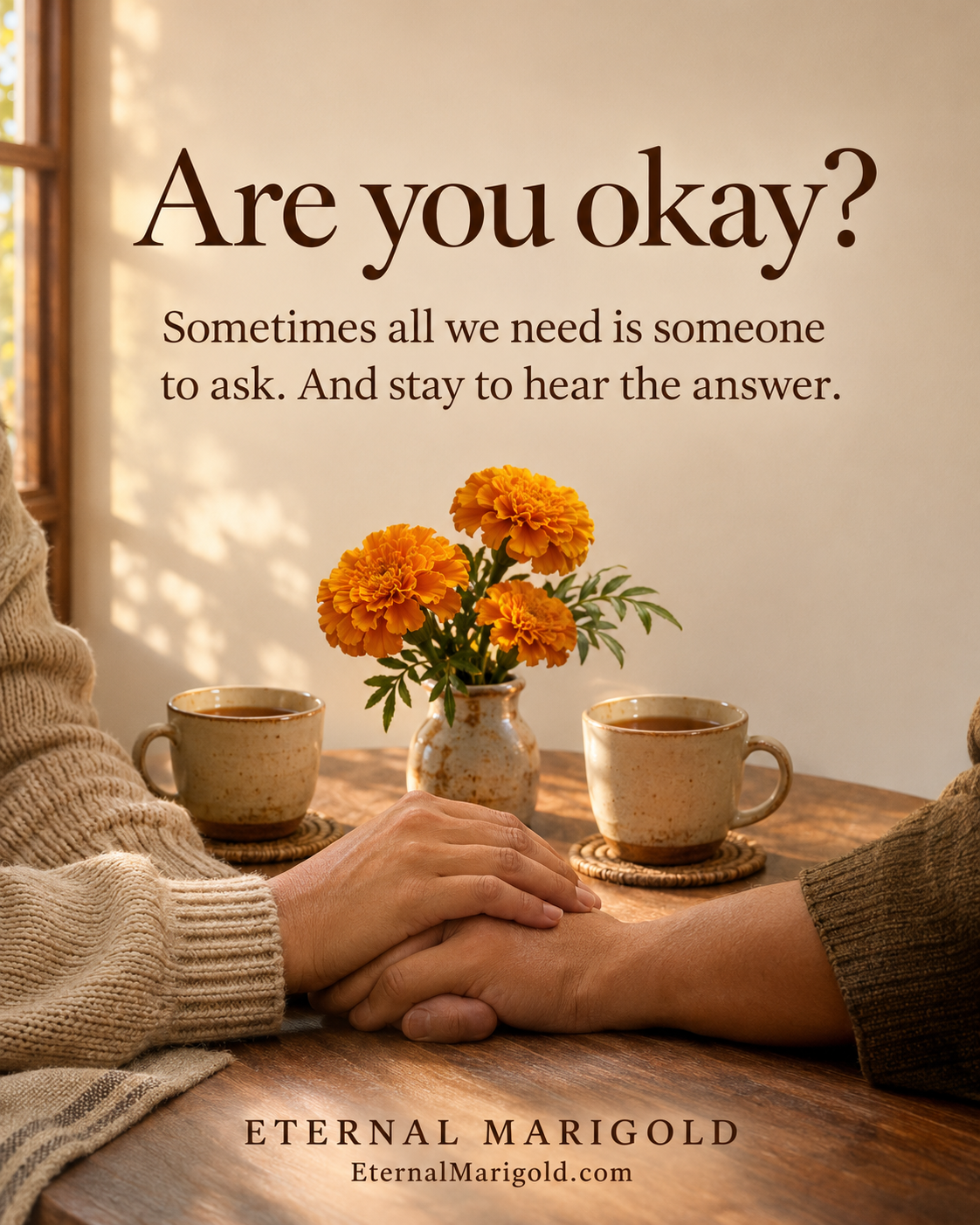
This is something I wanted to give words to in The Soulkeeper’s Way: sometimes all we really need in a moment is someone to ask, “Are you okay?” and mean it.
Someone with whom we can put down the effort of appearing fine.
We may need to talk about the same loss again. We may need to admit that something still hurts. We may not have a clear reason for why today feels harder than yesterday.
Being listened to gives us room to say those things without having to turn them into a lesson or end on something cheerful.
There is comfort in hearing, “You don’t have to apologize. I’m listening.”
A caring conversation cannot resolve every loss or replace professional support when it’s needed. But it can make room for honesty. It can help someone feel less alone in what they’re facing, and perhaps make it easier to ask for more support.
Reaching Out Without Having All the Answers
We sometimes hesitate to call because we don’t know what to say.
What if they cry? What if we bring up something painful? What if we can’t help?
We don’t have to arrive with a solution. We can begin with what is true.
“I’ve been thinking about you.”
“I heard what happened, and I wanted to check on you.”
“Do you feel like talking? I have time.”
Then we listen. We let them finish. We resist the urge to hurry them toward a brighter thought because their sadness makes us uncomfortable.
We can ask, “Would you like me to just listen, or is there something I can help with?”
And if they don’t want to talk, we can respect that, too. Care gives someone a choice. We can let them know we’re available and check in another day.
Three Words, Said With Care
I think about those FaceTime calls and how much it meant that my friend and my niece reached out. They knew there was history, love, and loss to hold. They made time for me in the middle of it.
We all deserve moments when we don’t have to make ourselves seem easier to care for. When we can be quiet, uncertain, sad, or tired and still feel welcome in someone’s company.
If someone has been on your mind, reach out. You don’t need to wait for them to announce that they’re struggling.
Sometimes all someone really needs to hear are three words:
“Are you okay?”
And then to discover, as they begin answering, that you have time to listen.