There is a common belief that spiritual awakening must look like the Buddha’s journey: years of wandering, a body pushed to its limits, the mind sharpened through hunger and isolation, a path carved by extreme austerity. And yes—his journey is sacred, timeless, and venerable. But somewhere along the way, many people came to believe that enlightenment requires suffering of the same magnitude.
What we forget is this:
The Buddha’s suffering was not a prescription. It was a story of one man’s search.
A map traced by his footsteps—not a mandate for ours.
In our modern lives, we are not asked to sit beneath the Bodhi tree after starving for days. We are not asked to abandon our families, or walk into forests looking for truth. Instead, our suffering comes to us in different forms—quiet, relentless, and deeply human.
Some of us endure heartbreak that fractures the spirit.
Some lose loved ones long before they are ready.
Some carry childhood wounds into adulthood without even realizing the weight.
Some simply feel lost in the noise of the world, unable to hear their own heartbeat.
And yet—
these experiences, too, shape the conditions for awakening.
What the Buddha discovered after all that suffering was not a grand secret hidden somewhere in the wilderness.
It was a truth already within him.
A truth that lived beneath every fear he carried and every illusion he shed.
That same truth lives within us today.
The Modern Path of Awakened Living
We do not awaken because we suffer.
We awaken when we finally choose to look inward and understand what our suffering has been trying to teach us.
And this is where Soul Keeper’s Way becomes the bridge.
Those who have suffered—who are still resilient, who have not collapsed under the weight of their hardships—already possess the raw material for awakening.
You don’t need to walk into the woods to find enlightenment.
You don’t need to starve.
You don’t need to excommunicate yourself from the world.
Your life has already initiated you.
Soul Keeper’s Way becomes the gentle guide that the ancient seekers never had. It doesn’t demand that you erase your humanity; it teaches you to understand it.
Every chapter, every reflection, every invitation in that book mirrors what the Buddha ultimately realized:
that liberation begins the moment we stop running from ourselves.
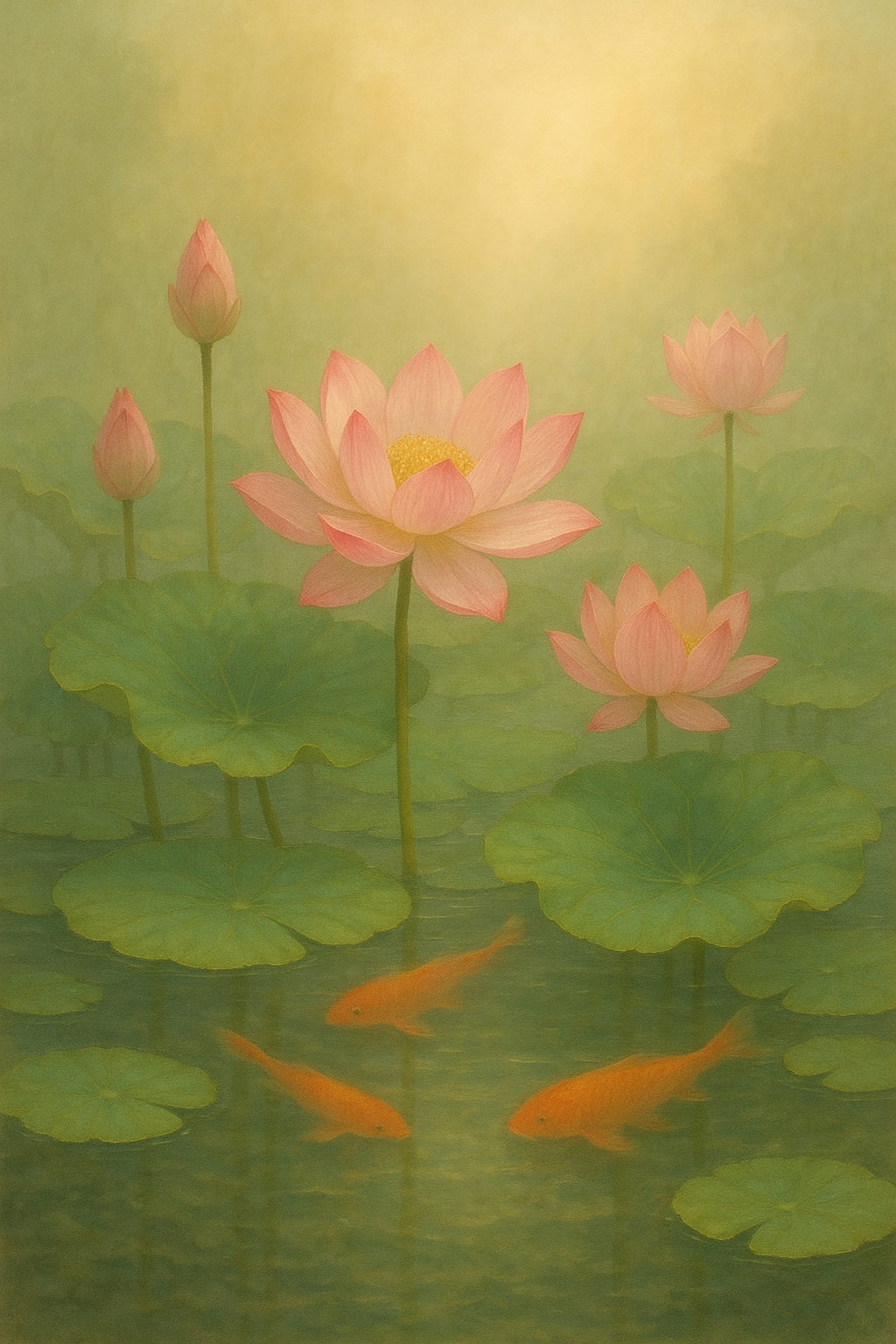
The Lotus Within Us
The lotus does not bloom because it escapes the mud.
It blooms because it rises through it.
The mud is not a punishment—it is nourishment.
The darkness is not a barrier—it is the womb of transformation.
The water is not a weight—it is the medium through which strength is built.
In the same way, our suffering does not disqualify us from awakening.
It prepares us.
When someone reads Soul Keeper’s Way, they are not asked to reject their past or purify their spirit through extreme discipline. They are asked to witness themselves. To breathe with their wounds rather than hide from them. To observe their patterns without shame. To soften where life taught them to harden.
This is the moment when the inner lotus begins to open:
not through force, not through renunciation, but through gentle honesty.
Awakening in the Era of the Human Heart
The modern world is chaotic, overstimulated, and often unkind. But there is a hidden blessing in that chaos:
It forces us to meet ourselves sooner than we expect.
We are confronted with our relationship patterns.
Our childhood wounds.
Our fears of abandonment.
Our fear of being unseen.
Our desire for love, belonging, and meaning.
Unlike the Buddha, who wandered outward in search of answers, we are pushed inward by the sheer intensity of life. And when we finally pause, when we finally look within with sincerity instead of judgment, we discover something astonishing:
We have already walked miles on the spiritual path without realizing it.
Soul Keeper’s Way simply helps us see the footsteps.
Through its reflections, we begin asking:
Why do I react this way when I’m hurt?
What is this emotion trying to reveal?
Who am I beneath the roles, the expectations, the survival instincts?
How can I return to myself without fear?
These are the real questions of awakening—no forest required.
A Path That Honors Real People
Awakening is accessible. Awakening is human. Awakening is for those who have endured and kept their hearts open.
You do not need to be a monk.
You do not need to escape your life.
You do not need to punish your body to purify your mind.
You do not need to be perfect.
You only need to be willing—to witness your truth, to face your shadows, to let your suffering soften into clarity.
This is why Soul Keeper’s Way is not just a book.
It’s a companion on the journey from woundedness to wisdom.
It is the gateway.
It is the light through the mud.
It is the hand that says, You can rise. You already are.
Suffering is not the price of awakening;
it is the invitation.
Those who have suffered are not cursed.
They are being called.
And Soul Keeper’s Way is the path that teaches them how to answer that call—not through extremes, not through isolation, but through gentle self-return.
There is another truth we must honor with reverence:
the path of the monks is a different path altogether.
What the monks are doing during this Walk for Peace is not the same as the awakening most of us seek. They made a deliberate, devoted choice—a vow to renounce the world’s pull, to step away from the warmth of human attachments, and to dedicate their lives to teaching the Dhamma with clarity and purity.
Their path is one of discipline, restraint, and sacred separation.
They walk lightly so they can carry the teachings deeply.
They let go of the comforts most humans cling to, not because they do not feel love, but because their service requires a different kind of love—a boundless, unattached compassion.
Most people are not called to that level of renunciation.
And they do not have to be.
The monks walk for us.
They embody a path so steep, so disciplined, that it becomes a beacon—a reminder of what the human spirit is capable of when it chooses complete simplicity and devotion.
The Soulkeeper’s Way speaks to the majority of humanity:
the mothers, the fathers, the healers, the broken-hearted, the ones navigating this world with full hands and full histories.
They awaken within the fabric of ordinary life.
Monks awaken outside of it.
Both are sacred.
Both are real.
But they are not the same.
What the monks are doing is a path of detachment.
What the Soulkeeper’s Way offers is a path of integration.
The monks relinquish human ties to preserve the purity of their minds.
But the Soul Keeper’s Way guides people to understand those ties, heal through them, and find awakening inside their human experience.
It is the lotus blooming in the mud—
not the lotus rising above the world altogether.